
Want to continue sound more "French" with your pronunciation? If so, there is a phenomena called the schwa (ə) [also known as le e muét ou le e caduct] which many French classes overlook. If you haven't done so already, it's recommended that you read this article: French Phonetics, before continuing.
The Sch...what?
In the realm of phonetics and phonology, the schwa is a weak, unstressed sound. To make matters easier for Anglophones, English actually contains the schwa (horray!!), it is practically everywhere in our language.
So what does the schwa sound like? The schwa in both French and English are represented by an"uh" sound. This could be found words like sofa /ˈsəʊfə/, about /əˈbaʊt/, or suspense /səˈspɛns/ in English, while French uses them in words like le and samedi.
More Schwa instances in English:
Look at all the highlighted schwas in the following sentence as you pronounce the words.
The present for my brother is a book about wizards.
The French Schwa
In French, the schwa represents the phonemes /ø/, /œ/, or /ə/ when they are unstressed (remember, check out French Phonetics if you have no idea what I'm talking about). Now the problem with the schwa in French is not necessarily identifying the sound, but rather figuring out when to use a schwa and when to omit it.



French Phonetic Alphabet Practice Exercises
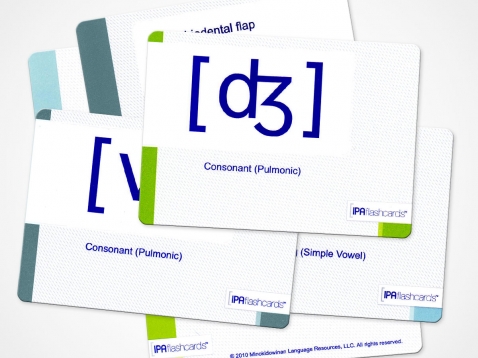 By using the phonetic alphabet (presented in this article) you can do several things with French to better your pronunciation:
1. Know all the sounds of the French Language
2. Be able to read French dictionaires and be able to pronounce words correctly from the given pronunciation
3. Be able to read / write / speak more proficiently by sounding out words correctly.
French Phonetic Exercises
For the first exercise, I'm going to write down French words using only IPA symbols. You should be able to properly say the words out loud and guess what they are (to make the task easier, I placed spaces between syllables). Answers are provided right below... try not to cheat!
Example: [sy btɛR fyʒ] = subterfuge
[klak] =
[pɔʀ] =
[ble] =
[ʃa to] =
[tRẽ] =
[ʃə miz] =
[sol] =
[ø ʀɔp] =
[si ɛʒ] =
[vi] =
[mõ te] =
[vwa tyʀ] =
[lyt] =
[ʃɑ̃ paɲ] =
The Difference between Parce Que and Car
 In French, what's the difference between parce que, car, en effet, and puisque? Many students have a problem between these words because they are used in very similar situations, so I'll offer up a quick explanation!
Parce Que:
Parce que introduces a cause. It's also less formal and more universally accepted as the English equivalent of because. Parce que has the ability to start a sentence, something you can't do with car.
La pomme? Je l'ai mangée parce que j'avais faim.
The apple? I at it because I was hungry.
Parce qu'elle est mignonne, elle gagne plus que Pauline.
Because she is cute, she earns more than Pauline.
Subscribe to:
Posts (Atom)